
Drainage & Grading Solutions for Fort Worth and North Texas
Water problems rarely begin at the drain. Kingsway evaluates how water enters, moves across and leaves the property so the solution works with the entire site.
A Drainage System Is a Path for Water
Pooling water, erosion, saturated planting beds and runoff near structures can have different causes even when they look similar at the surface.
We start with elevations, flow paths, contributing areas, existing hardscape, downspouts, walls and discharge options. The goal is to move water predictably without simply transferring the problem somewhere else.
The Right System Depends on the Site
A good drainage plan may use one method or several working together.
Surface Drains & Catch Basins
Collect concentrated surface water at low points, beds and hardscape edges.
French Drains
Intercept subsurface or migrating water where a gravel-and-pipe system is appropriate.
Channel Drains
Capture sheet flow along patios, walks, drive edges and other paved transitions.
Grading & Swales
Use elevation and shaped ground to move water before it becomes a collection problem.
Downspout Management
Route roof runoff into a controlled system instead of releasing it beside the foundation or landscape.
Retaining Wall Drainage
Relieve water behind walls and coordinate drainage with the structure and surrounding grade.
Drainage Has to Work With Grade, Soil and Construction
North Texas properties can combine heavy rainfall, expansive soils, flat areas, hardscape runoff and abrupt elevation changes. That makes diagnosis more important than simply choosing a drain type.
We look at the source, volume, path and discharge point before deciding how to collect or redirect water.
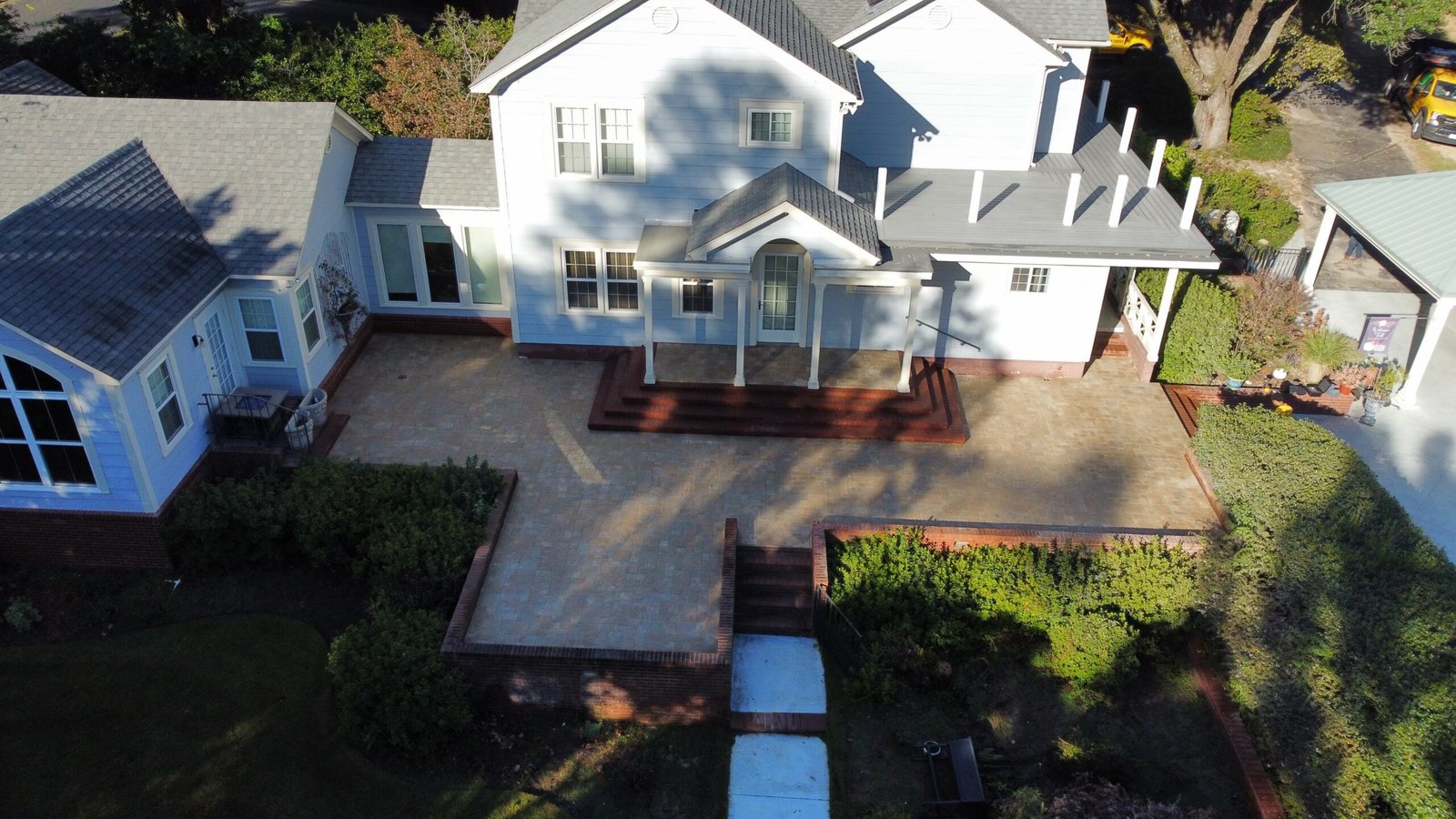
A Practical Drainage Process
EVALUATE
Review the property, visible symptoms, grades, runoff sources and likely discharge routes.
PLAN
Determine where water should be intercepted, conveyed and released.
BUILD
Install the selected drainage and grading components with the surrounding landscape and hardscape in mind.
VERIFY
Confirm flow paths, outlets and finished grades before the project is closed.
Drainage Questions Homeowners Usually Ask
Do I automatically need a French drain?
No. French drains are useful for certain subsurface-water conditions, but many yard problems are caused primarily by surface grading, concentrated runoff or inadequate collection points.
Where should drainage water go?
The answer depends on the property and local constraints. A drainage plan needs a practical, lawful discharge point that does not simply move the problem to another part of the site or onto a neighboring property.
Can drainage be added to an existing landscape?
Often, yes. The challenge is integrating collection, pipe routes, outlets and restored finishes without creating new grading or aesthetic problems.
Show Us Where the Water Is Going
Photos, video during a rain event and a short description of what you are seeing can help us understand the problem before the first site conversation.